



Tokyo, Japan, March 18, 2025 – Toray Industries, Inc., announced today that it has launched PICASUS™ VT (see note 1), a wide nano-multilayer film that reflects light only from oblique angles. Applied to head-up display (HUD; note 2) technology, the film can deliver double image-free high-definition displays across a full-screen area of windshields. These displays remain clear even when viewed through polarized sunglasses.
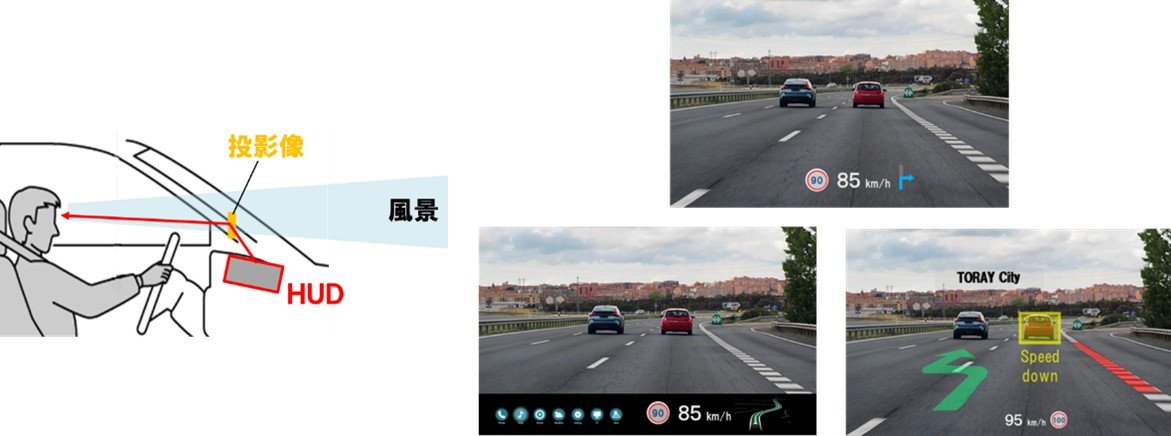
Current HUD technology shows information by projecting S-polarized (note 3) images onto the windshield because glass surfaces more easily reflect S-polarized light. Regular windshields, however, reflect images on the front and rear surfaces of the glass, causing double images. Windshields designed to prevent this issue enable clear display only in some areas. Polarized sunglasses worn widely in Europe and the United States absorb S-polarized light. The trouble is that HUD images become impossible to see when wearing such sunglasses.