 :+86 18928917855
  :sales@qinlefilms.com

Best Practices for Stretch Film Selection
Best Practices for Stretch Film Selection
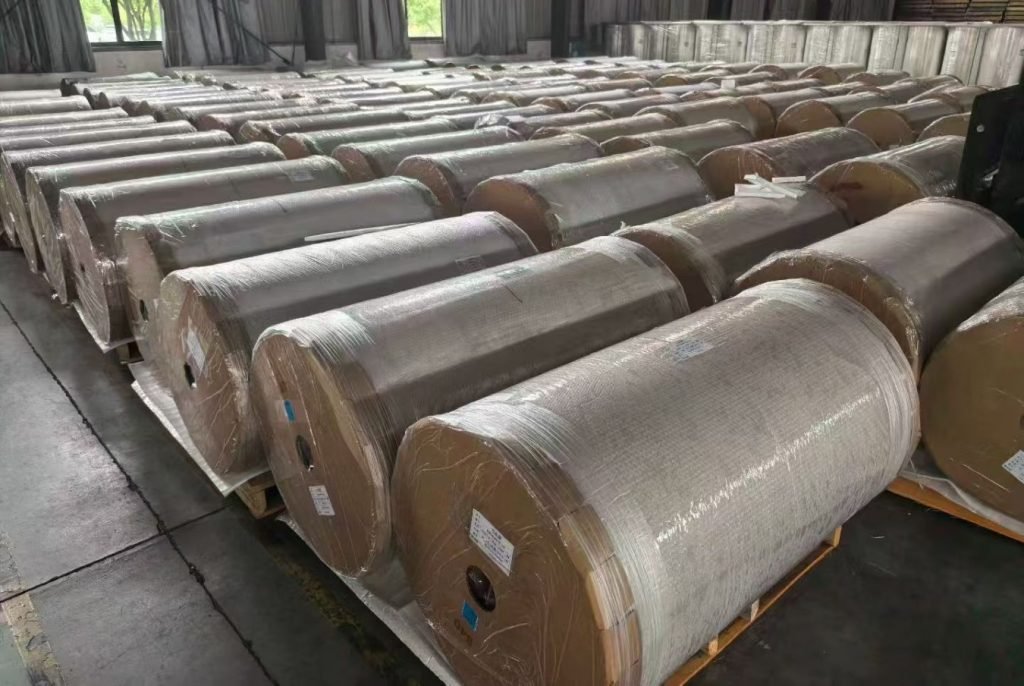
When choosing stretch film, customers need to comprehensively evaluate based on their own packaging scenarios (such as cargo type, transportation environment, automation level, etc.), focusing on three core dimensions: practicality, cost-effectiveness, and safety. Specifically, the following 8 key factors should be prioritized:
Table of Contents
- 1. Core Performance Indicators: Determining Packaging Stability
- 2. Material Selection: Matching Application Scenarios and Costs
- 3. Specification Parameters: Adapting to Packaging Methods and Cargo Sizes
- 4. Packaging Method: Matching Automation Level
- 5. Cost and Cost-effectiveness: Avoid “Focusing Only on Unit Price and Ignoring Usage”
- 6. Environmental Adaptability: Adapting to Storage and Transportation Conditions
- 7. Environmental Protection and Compliance
- 8. Suppliers and After-sales Service
- Summary: Selection Decision-making Process
1. Core Performance Indicators: Determining Packaging Stability
The performance of stretch film directly affects the protection effect of goods during storage and transportation, serving as the core basis for selection.
1.1 Elongation Rate and Shrinkage Force
Elongation Rate: Refers to the maximum ratio at which the film can return to its original length after being stretched.
- Manual packaging: Choose films with an elongation rate of 150%–250%. Excessively high elongation may cause breakage.
- Machine packaging: Select high-elasticity films with an elongation rate of 250%–400%. Higher elasticity reduces film usage and lowers cost.
Shrinkage Force: Determines whether goods can be tightly wrapped. Insufficient shrinkage can lead to relaxation or displacement, especially for irregularly shaped goods.
1.2 Puncture Resistance and Tear Resistance
For goods with sharp edges (metal parts, wooden pallets, etc.), prioritize high puncture-resistant films. Films with poor tear resistance are prone to crack propagation—test both longitudinal and transverse tear strength.
1.3 Adhesion (Self-adhesion)
Adhesion determines how well layers stick together:
- Low-temperature: Choose high-adhesion films with low-temperature additives.
- Normal-temperature: Moderate adhesion is sufficient to avoid sticking when unpacking.
1.4 Transparency and Gloss
For visual inspection (e.g., food or electronics), choose films with ≥90% light transmittance and no impurities. Gloss mainly affects appearance.
2. Material Selection: Matching Application Scenarios and Costs
Different stretch film materials have distinct performance differences. Choose based on cost, environmental requirements, and durability.
| Material Type | Core Characteristics | Applicable Scenarios | Advantages & Disadvantages |
|---|---|---|---|
| PE Stretch Film | High cost-effectiveness, low-temperature resistance | General packaging, cold chain | + Low cost, flexible − Poor high-temperature resistance (>60℃) |
| PVC Stretch Film | High transparency, low elongation (~100%) | Light/small items, short-term storage | + Clear appearance − Poor tear resistance, unsuitable for heavy goods |
| LLDPE Stretch Film | High elongation, strong puncture resistance | Heavy goods, long-distance transport | + Durable and stable − Slightly higher cost |
| Eco-friendly Stretch Film | Degradable (bio-based PE, PBAT) | Food, pharmaceuticals, export packaging | + Eco-compliance − 30–50% higher cost |
3. Specification Parameters: Adapting to Packaging Methods and Cargo Sizes
3.1 Width
- Manual: 500–600mm (easy handling).
- Machine: Based on pallet width (1000–1200mm).
Ensure the width can fully cover goods to avoid damage.
3.2 Thickness
Common: 15–50μm.
- Light items <10kg: 15–25μm
- Medium 10–50kg: 25–35μm
- Heavy/sharp goods >50kg: 35–50μm
Request measured thickness data to ensure quality.
3.3 Length and Weight
- Manual: 100–200m rolls (1–3kg)
- Machine: 500–1000m rolls (10–20kg)
4. Packaging Method: Matching Automation Level
4.1 Manual Packaging
“Easy to stretch, hard to break.” Choose low‑elongation PE or LLDPE (150%–200%).
4.2 Machine Packaging (Semi‑automatic / Full‑automatic)
Require high elongation (250%–400%), uniform thickness, good flatness.
4.3 Special Packaging
- Pre‑stretched: Pre‑stretched films (stretching rate up to 500%)
- Anti‑static: Surface resistance 10⁸–10¹¹Ω for electronic components
5. Cost and Cost‑effectiveness: Avoid “Focusing Only on Unit Price and Ignoring Usage”
5.1 Cost per Square Meter
Formula: Cost/㎡ = Roll Price ÷ Total Area
Example: Film A: 20 RMB / 100㎡ → 0.2 RMB/㎡ Film B: 30 RMB / 250㎡ → 0.12 RMB/㎡ Though pricier, Film B is more cost‑effective.
5.2 Usage and Loss
High‑elongation = less usage. Poor quality = higher break/loss rate. Always test before bulk purchase.
6. Environmental Adaptability: Adapting to Storage and Transportation Conditions
6.1 Temperature Resistance
- Low‑temperature (‑20℃ to 0℃): Low‑temperature PE films
- High‑temperature (60℃–80℃): Heat‑resistant LLDPE films
6.2 Aging Resistance
- Long‑term storage: Add antioxidants/UV stabilizers
- Short‑term turnover: Regular film is sufficient
7. Environmental Protection and Compliance
7.1 Environmental Requirements
- Domestic: Food or pharmaceutical‑grade films (GB 4806.7‑2016)
- Export: Comply with REACH (EU) and FDA (US)
7.2 Recyclability
- PE films are recyclable
- PVC films contain chlorine and may face recycling restrictions
8. Suppliers and After‑sales Service: Ensuring Stability and Support
8.1 Supplier Qualifications
Choose manufacturers with ISO9001 certification and stable production capacity. Request testing (e.g., elongation, puncture) before mass purchasing.
8.2 After‑sales Support
- Clear return / exchange policy
- Efficient logistics and emergency response (e.g., replenishment within 3 days)
Summary: Selection Decision‑making Process
- Clarify needs: Cargo → Packaging method → Environment → Compliance
- Identify parameters: Material → Thickness → Width
- Compare cost‑effectiveness: Area cost + loss rate
- Test samples: Verify stretchability, puncture strength, adhesion
- Confirm supplier: Qualification & after‑sales stability